
Quick answer
For most visitors, yes — Kotor Old Town opens 08:00–20:00 daily and sits close enough to Dubrovnik for a full day on foot inside the walls. The 15 EUR conservation fee covers the fortress climb of 1350 steps. The caveat: cruise arrivals and August heat can flatten the experience, so timing matters more than the distance.
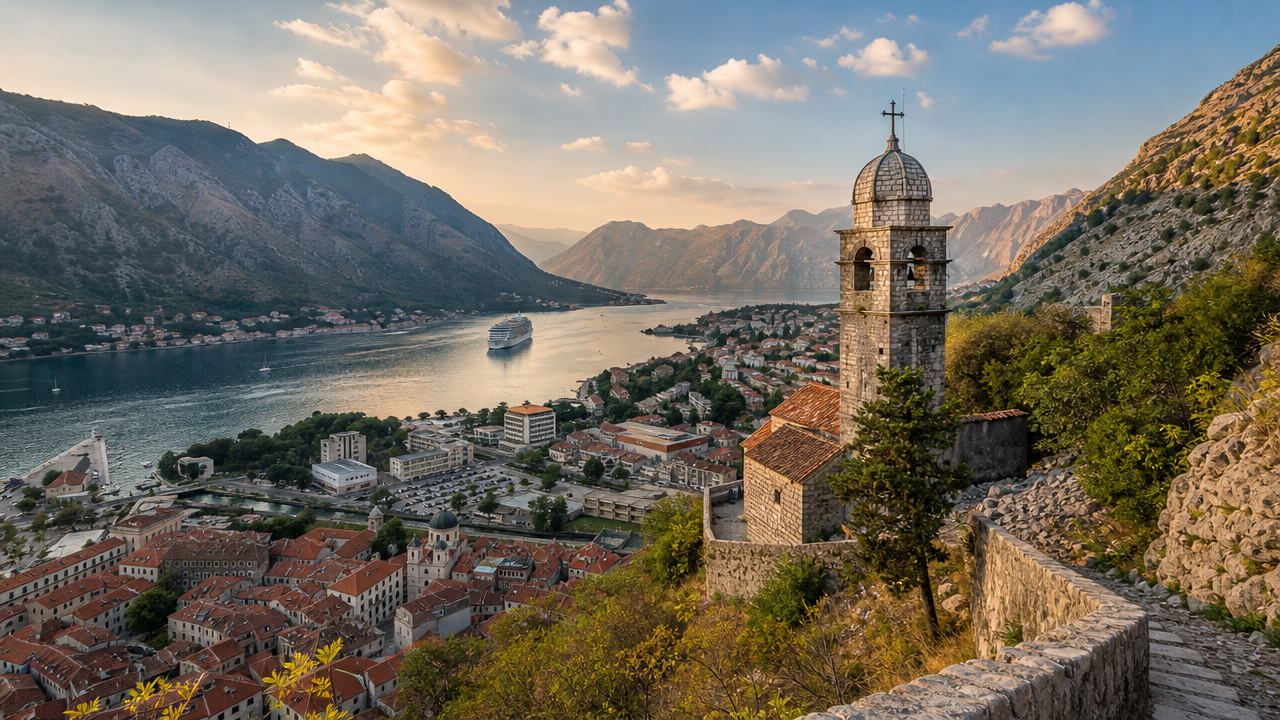
Kotor's fortifications climb 260 metres up a near-vertical limestone face, and the walls were still being repaired into the twentieth century after earthquakes repeatedly tore them open. That verticality is the whole argument. Dubrovnik's walls circle a town; Kotor's walls abandon the town entirely and go up the mountain, past the Church of Our Lady of Remedy, toward the Fortress of St John. Nothing on the Croatian coast does this. The question of whether is kotor worth visiting from dubrovnik usually hides a different question: whether the crossing eats the day. It does take a real bite. Travellers weighing a Kotor day trip from Dubrovnik should understand they are trading roughly half the daylight for a compact medieval core of about six hectares — St Tryphon's Cathedral, consecrated in 1166, the Maritime Museum in the Grgurina Palace, the Sea Gate with its Venetian lion, and a lattice of squares small enough to cross in ninety seconds. The Bay of Kotor itself, a drowned river canyon rather than a true fjord, carries much of the value; Perast and the island church of Our Lady of the Rocks sit along the same shoreline and are frequently paired with the town. Context sharpens the verdict. Kotor entered UNESCO's World Heritage list in 1979 as a Natural and Culturo-Historical Region, and the designation covers the bay as much as the stone. Montenegro also uses the euro without being in the eurozone, which removes one friction point. Prices inside the walls run below Dubrovnik's, and the town's cats — an unofficial civic emblem with their own small museum — tell you something about its scale and temper. Who should skip it: anyone with a single day left in Dubrovnik and Dubrovnik's own walls unclimbed, anyone travelling with limited mobility who wanted the fortress specifically, and anyone unwilling to move early. Kotor rewards the visitor who arrives before the town wakes and treats the climb as the day's main event rather than an afterthought. Answering is kotor worth visiting from dubrovnik honestly means accepting that the town at 11:00 in August, under three cruise ships, is a different and lesser place than the town at 08:30. The Montenegrin coast repays discipline. Plan the hours, and the answer resolves itself.
“Dubrovnik's walls circle a town; Kotor's walls abandon the town entirely and go up the mountain.”
When Is the Best Time to Visit Kotor from Dubrovnik?
The best arrival window is 08:00–09:00 to avoid midday extreme heat and cruise ship crowds. Planning your trip during the shoulder seasons helps manage the traffic between Dubrovnik and Kotor.
Spring (April–May)
ModerateMild, 15°C–22°C
Pleasant temperatures for walking and fewer cruise ships in port.
Summer (June–August)
HighHot, 25°C–32°C
Expect intense heat and significant congestion from daily cruise arrivals.
Autumn (September–October)
ModerateWarm, 18°C–26°C
Sea temperatures remain comfortable and visitor numbers begin to decrease.
Weekday mornings
Low—
Arriving early provides the quietest experience before tourist buses arrive from Dubrovnik.
Verdict: The best time to visit is during the shoulder months of April, May, or October, specifically arriving on a weekday between 08:00–09:00.
Is Kotor Worth Visiting from Dubrovnik: A Practical Day Trip Plan
This plan suits independent travellers making a self-driven or coach-based return trip from Dubrovnik in a single day, with roughly twelve hours door to door and about four hours on the ground in Kotor. It assumes an early departure and a late-afternoon return, leaving the bulk of the day for the Old Town itself.
Leave Dubrovnik
Set off south for the Adriatic coast road; budget three to three and a half hours including the two border crossings, which can add 30-60 minutes in summer.
Enter through Sea Gate
Walk in from the waterfront car parks and pause at Arms Square by the Clock Tower to get your bearings. Allow 20 minutes before the first cruise groups filter through.
St Tryphon's Cathedral
Spend 40 minutes at the Romanesque cathedral on Trg Svetog Tripuna, including the upstairs reliquary chapel. Modest dress is expected inside.
Climb toward St John's Fortress
The fortification route above the town is the main physical undertaking of the day; the conservation fee is collected at the lower gate. Two hours up and down at a steady pace, less if you stop at the Church of Our Lady of Remedy halfway.
Lunch off Trg od Salate
Eat away from the main squares where prices and queues both drop. Allow an hour, and refill water bottles before you leave.
Maritime Museum and back lanes
Forty-five minutes in the Grgurina Palace collection, then wander Trg od Mlijeka and the Kampana bastion. Alleys are unsigned, so pin your exit gate.
Depart for Dubrovnik
Leave a buffer for the Verige strait ferry queue or the longer drive around the bay. Expect to be back in Dubrovnik between 18:30 and 19:30.
How to Travel and Is Kotor Worth Visiting from Dubrovnik
Kotor is located in Montenegro, approximately 90 kilometers southeast of Dubrovnik. Reaching the town requires crossing the international border, which is most efficiently managed via bus or private vehicle.
Direct service from Dubrovnik Main Bus Station to Kotor Bus Station
Route D8 to E65/E80 via the Karasovići-Debeli Brijeg border crossing
Direct transfer via E65/E80 coastal road
Opening Hours for Your Kotor Day Trip from Dubrovnik
The Kotor city walls are open daily for visitors throughout the week. Standard operating hours remain consistent regardless of the day.
| Monday | 08:00–20:00 | |
|---|---|---|
| Tuesday | 08:00–20:00 | |
| Wednesday | 08:00–20:00 | |
| Thursday | 08:00–20:00 | |
| Friday | 08:00–20:00 | |
| Saturday | 08:00–20:00 | |
| Sunday | 08:00–20:00 |
Accessibility Considerations When Visiting Kotor from Dubrovnik
Kotor Old Town presents significant physical challenges due to its historic stone streets and steep terrain. Visitors should be aware that the ancient fortifications require navigating 1350 steps.
Flat limestone surfaces exist in some central areas but navigation is restricted.
The historic center features uneven surfaces and stairs throughout the perimeter.
Public facilities within the Old Town lack modern accessibility standard compliance.
Visiting during the early arrival window helps avoid congestion in narrow passages.
Check availability
Common questions about visiting Kotor from Dubrovnik
Everything you need to know about is kotor worth visiting from dubrovnik